Message

Johanna
Ise Bay, Japan
Ise Bay, Japan
Main Contributors:
Other Contributors:

Summary
Type of regime shift
Ecosystem type
- Marine & coastal
Land uses
- Fisheries
Spatial scale of the case study
- Local/landscape (e.g. lake, catchment, community)
Continent or Ocean
- Asia
Region
- East Asia
Countries
- Japan
Locate with Google Map
Key References
-
Nakata K, Takei M, Nakane T, Maxwell G, Torpie D. 1997. Dissolved oxygen depletion analysis and visualization in Ise Bay, Japan, using a GIS approach. 11th Annual Australian ESRI & ERDAS Users Conference Proceedings.
Citation
Hiuchi Sound, Japan
Hiuchi Sound, Japan
Main Contributors:
Other Contributors:
Summary
Type of regime shift
Ecosystem type
- Marine & coastal
Land uses
- Fisheries
Spatial scale of the case study
- Local/landscape (e.g. lake, catchment, community)
Continent or Ocean
- Asia
Region
- East Asia
Countries
- Japan
Locate with Google Map
Key References
-
Sanukida S, Okamoio H, Hitomi M. 1984. Alternation of pollution indicator species of macrobenthos during stagnant period in eastern Hiuchi Sound. Bull. Jap. Soc. Sci. Fish./Nissuishi 50, 727.
Citation
Hakata Bay, Japan
Hakata Bay, Japan
Main Contributors:
Other Contributors:

Summary
Hypoxia in the bottom waters of the inner Hakata bay is caused byexcessive inputs of nutrients and organic materials and strong stratification caused by meteorology and freshwater inflow.
Type of regime shift
Ecosystem type
- Marine & coastal
Land uses
- Fisheries
Spatial scale of the case study
- Local/landscape (e.g. lake, catchment, community)
Continent or Ocean
- Asia
Region
- East Asia
Countries
- Japan
Locate with Google Map
Key References
-
Karim R, Sekine M, Ukita M. 2002. Simulation of eutrophication and associated occurrence of hypoxic and anoxic condition in a coastal bay in Japan. Marine Pollution Bulletin 45, 280-285.
Citation
Gokashu Bay, Japan
Gokashu Bay, Japan
Main Contributors:
Other Contributors:

Summary
Hypoxia in Gokasho Bay is caused by both anthropogenic (aquaculture) and natural factors.
Type of regime shift
Ecosystem type
- Marine & coastal
Land uses
- Fisheries
Spatial scale of the case study
- Local/landscape (e.g. lake, catchment, community)
Continent or Ocean
- Europe
Region
- East Asia
Countries
- Japan
Locate with Google Map
Key References
-
Yokoyama H. 2002. Impact of fish and pearl farming on the benthic environments in Gokasho Bay: Evaluation from seasonal fluctuations of the macrobenthos. Fisheries Science 68, 258-268.
Citation
Funka Bay, Japan
Funka Bay, Japan
Main Contributors:
Other Contributors:

Summary
Hypoxia in Funka Bay was not observed until in the 1980s. During the summer and autumn of 1995 - 1997, severe hypoxia occurred in the bay and affected the fauna, e.g. coonstripe shrimp (Pandalus hypsinotus) decreased drastically in the hypoxic area.
Type of regime shift
Ecosystem type
- Marine & coastal
Land uses
- Fisheries
Spatial scale of the case study
- Local/landscape (e.g. lake, catchment, community)
Continent or Ocean
- Asia
Region
- East Asia
Countries
- Japan
Locate with Google Map
Key References
-
Kimura M, Takahashi T, Takatsu T, Nakatani T, Maeda T. 2004. Effects of hypoxia on principal prey and growth of flathead flounder Hippoglossoides dubius in Funka Bay, Japan. Fisheries Science 70, 537-545.
Citation
Dokai Bay, Japan
Dokai Bay, Japan
Main Contributors:
Other Contributors:
Summary
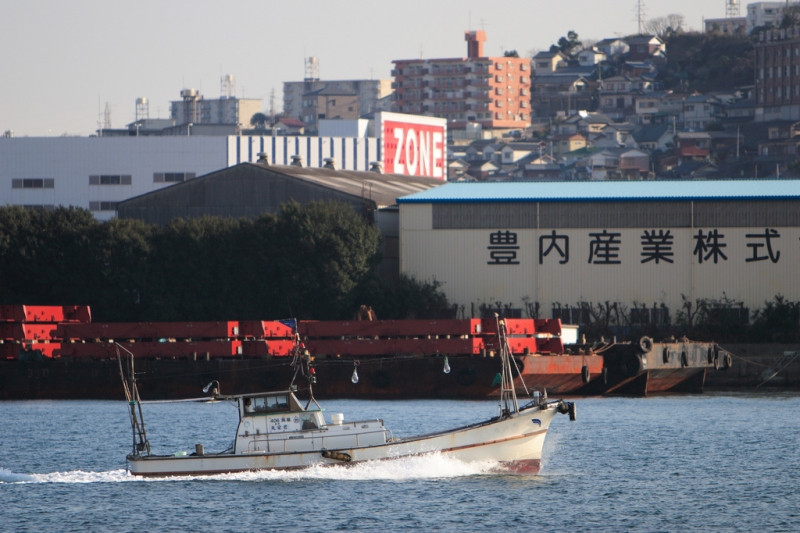
Dokai Bay is eutrophic. According to a study based on measures in 1992 and 1993, hypoxia occurs from the bottom to the middle water layer during summers. On the tidal flats oxygen is accessible to benthic animals throughout the year, but the number of macrobenthos decline nevertheless.
Type of regime shift
Ecosystem type
- Marine & coastal
Land uses
- Fisheries
Spatial scale of the case study
- Local/landscape (e.g. lake, catchment, community)
Continent or Ocean
- Asia
Region
- East Asia
Countries
- Japan
Locate with Google Map
Key References
-
Ueda N, Tsutsumi H, Yamada M, Hanamoto K, Montani S. 2000. Impacts of oxygen-deficient water on the macrobenthic fauna of Dokai Bay and on adjacent intertidal flats, in Kitakyushu, Japan. Marine Pollution Bulletin 40, 906-913.
Citation
Beppu Bay, Japan
Beppu Bay, Japan
Main Contributors:
Other Contributors:
Summary
Type of regime shift
Ecosystem type
- Marine & coastal
Land uses
- Fisheries
Spatial scale of the case study
- Local/landscape (e.g. lake, catchment, community)
Continent or Ocean
- Asia
Region
- East Asia
Countries
- Japan
Locate with Google Map
Key References
-
Suzuki T. 2001. Oxygen-deficient waters along the Japanese coast and their effects upon the estuarine ecosystem. J. Environ. Qual. 30, 291-302-
Citation
Ariake & Isahaya Bays, Japan
Ariake & Isahaya Bays, Japan
Main Contributors:
Other Contributors:
Summary
It is suggested that the Isahaya Reclamation Project initiated eutrophic and hypoxic conditions in the area due to limited seawater exchange.
Type of regime shift
Ecosystem type
- Marine & coastal
Land uses
- Fisheries
Spatial scale of the case study
- Local/landscape (e.g. lake, catchment, community)
Continent or Ocean
- Asia
Region
- East Asia
Countries
- Japan
Locate with Google Map
Key References
-
Hodoki Y, Murakami T. 2006. Effects of tidal flat reclamation on sediment quality and hypoxia in Isahaya Bay. Aquatic Conservation: Marine and Freshwater Ecosystems 16, 555-567.
Citation
Gulf of Trieste, the Mediterranean Sea
Gulf of Trieste, the Mediterranean Sea
Main Contributors:
Other Contributors:
Summary
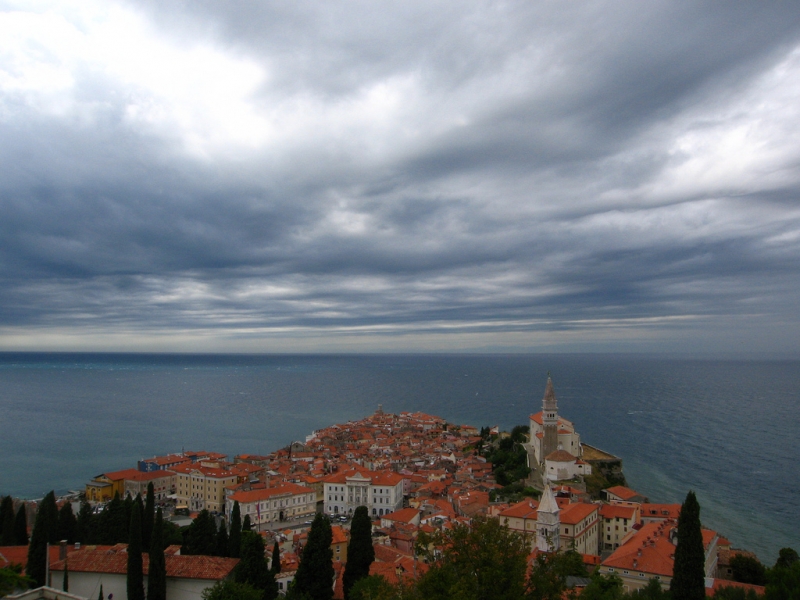
Gulf of Trieste, one of the most productive areas in the Mediterranean Sea, experiences seasonal hypoxia. For instance in 1983, hypoxia and anoxia caused severe mass mortality.
Type of regime shift
Ecosystem type
- Marine & coastal
Land uses
- Fisheries
Spatial scale of the case study
- Sub-continental/regional (e.g. southern Africa, Amazon basin)
Continent or Ocean
- Europe
Region
- Mediterranean
Countries
- Slovenia
- Croatia
- Italy
Locate with Google Map
Key References
-
Stachowitsch M. 2008. Mass mortality in the Gulf of Trieste: The course of community destruction. Marine Ecology 5, 243-264.
Citation
Venice Lagoon, Italy
Venice Lagoon, Italy
Main Contributors:
Other Contributors:

Summary
Organic matter, persistent high temperature and stable weather conditions cause anoxia, which can be entended to the entire water column of the Lagoon of Venice. The lagoon area has been modified by humans for fish farming and for agricultural and industrial purposes (land reclamation).
Type of regime shift
Ecosystem type
- Marine & coastal
- Freshwater lakes & rivers
Land uses
- Fisheries
Spatial scale of the case study
- Local/landscape (e.g. lake, catchment, community)
Continent or Ocean
- Europe
Region
- Mediterranean
Countries
- Italy
Locate with Google Map
Key References
-
Flindt MR, Kamp-Nielsen L, Marques JC, Pardal MA, Bocci M, Bendoricchio G, Salomonsen J, Nielsen SN, Jorgensen SE. 1997.Description of the three shallow estuaries: Mondego River (Portugal), Roskilde Fjord (Denmark) and the Lagoon of Venice (Italy). Ecological Modelling 102, 17-31.
