Message

Johanna
Archipelago Sea, Finland
Archipelago Sea, Finland
Main Contributors:
Other Contributors:

Summary
Seasonal hypoxia in theArchipelago Sea is caused by coastal eutrophication, which has been the greatest threat to the Archipelago ecosystem since the 1970s. Hypoxia has caused changes in species composition.
Type of regime shift
Ecosystem type
- Marine & coastal
Land uses
- Fisheries
Spatial scale of the case study
- Local/landscape (e.g. lake, catchment, community)
Continent or Ocean
- Europe
Region
- North Europe
Countries
- Finland
Locate with Google Map
Key References
-
Bonsdorff E, Blomqvist EM, Mattila J, Norkko A. 1997. Coastal eutrophication: causes, consequences and perspectives in the archipelago areas of the Northern Baltic Sea. Estuarine, Coastal and Shelf Science 44, 63-72.
Citation
Åland Archipelago, Finland
Åland Archipelago, Finland
Main Contributors:
Other Contributors:

Summary
Åland archipelago is an eutrophic area receiving nutrient inputs from numerous sources. Algae has increased in the area since the early 1990s. Hypoxia and anoxia occur frequently and have caused benthic mortality. Fish have decreased in abundance, biomass and diversity during the occurrence of algal mats.
Type of regime shift
Ecosystem type
- Marine & coastal
Land uses
- Fisheries
Spatial scale of the case study
- Sub-continental/regional (e.g. southern Africa, Amazon basin)
Continent or Ocean
- Europe
Region
- North Europe
Countries
- Finland
Locate with Google Map
Key References
-
Bonsdorff E, Blomqvist EM, Mattila J, Norkko A. 1997. Coastal eutrophication: causes, consequences and perspectives in the archipelago areas of the Northern Baltic Sea. Estuarine, Coastal and Shelf Science 44, 63-72.
Citation
Thames Estuary, UK
Thames Estuary, UK
Main Contributors:
Other Contributors:

Summary
Seasonal hypoxia in the Thames estuary was first recorded in the 1920s. Compared to the 1930-1970s, the hypoxic conditions have now improved due to nutrientmanagement.
Type of regime shift
Ecosystem type
- Freshwater lakes & rivers
Land uses
- Fisheries
Spatial scale of the case study
- Local/landscape (e.g. lake, catchment, community)
Continent or Ocean
- Europe
Region
- Southern England
Countries
- United Kingdom
Locate with Google Map
Key References
-
Andrews MJ, Rickard DG. 1980. Rehabilition of the inner Thames estuary. Marine Pollution Bulletin 11, 327-332.
Citation
Mersey Estuary, UK
Mersey Estuary, UK
Main Contributors:
Other Contributors:

Summary
The Mersey river has been calledone of the most polluted rivers in Europe. It has received discharges since the beginning of the Industrial Revolution from manufacturing processes and population centres. Mersey Estuary has seasonal hypoxia annually at least in one spot upriver. Hypoxic conditions have improved from nutrient managent. Due to recovery fish (e.g. Salmon) have returned to the waters.
Type of regime shift
Ecosystem type
- Freshwater lakes & rivers
Land uses
- Fisheries
Spatial scale of the case study
- Local/landscape (e.g. lake, catchment, community)
Continent or Ocean
- Europe
Region
- North west England
Countries
- United Kingdom
Locate with Google Map
Key References
-
Jones, PD. 2000. The Mersey Estuary - Back from the dead? Solving a 150-year old problem. Water and Environmental Journal 14, 124-130.
Citation
Forth Estuary, UK
Forth Estuary, UK
Main Contributors:
Other Contributors:
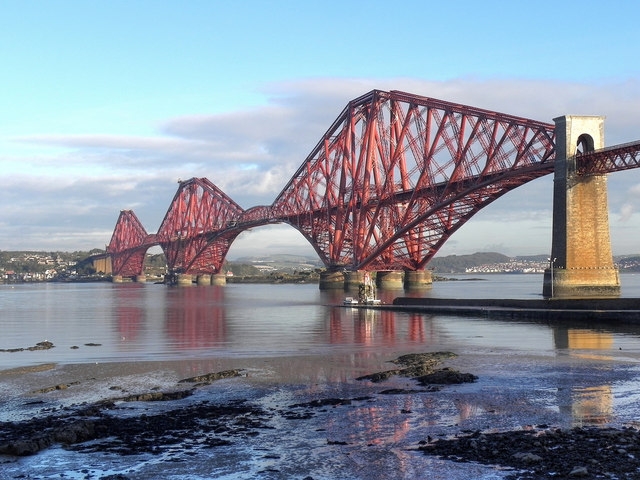
Summary
The Fourth Estuary receives domestic and industrial wasteand develops hypoxia especially under low river discharge conditions, which usually occur at summer. Fish kills have been reported.
Type of regime shift
Ecosystem type
- Marine & coastal
Land uses
- Fisheries
Spatial scale of the case study
- Local/landscape (e.g. lake, catchment, community)
Continent or Ocean
- Europe
Region
- North Sea
Countries
- United Kingdom
Locate with Google Map
Key References
-
Balls PW, Brockie N, Dobson J, Johnston W. 1996. Dissolved Oxygen and Nitrification in the Upper Forth Estuary During Summer (1982–92): Patterns and Trends. Estuarine, Coastal and Shelf Sciece 42, 117-134.
Citation
Alexandria Harbor, Egypt
Alexandria Harbor, Egypt
Main Contributors:
Other Contributors:

Summary
Alexandria Harbor hypoxia is seasonal. The harbor is an eutrophic area with many input sources: maritime activities, agriculture, stored fertilizers, domestic and industrial waste.
Type of regime shift
Ecosystem type
- Marine & coastal
Land uses
- Fisheries
Spatial scale of the case study
- Local/landscape (e.g. lake, catchment, community)
Continent or Ocean
- Africa
Region
- North Africa
Countries
- Egypt
Locate with Google Map
Key References
-
Abdel-Aziz NE, Fahmy MA, Dorgham MM. 2001. Hydrography, nutrients and plankton abundance in the hot spot of Abu Qir Bay, Alexandria, Egypt. Mediterr. Mar. Sci. 2, 17-31.
-
Dorgham M, El-Deeb K, Okbah M. 2004. Eutrophication problems in the Western Harbour of Alexandria, Egypt. Oceanologia 46, 25-44.
-
Ismael A, Dorgham M. 2003. Ecological indices as a tool for assessing pollution in El-Dekhaila Harbour (Alexandria, Egypt). Oceanologia 45, 121-131.
Citation
Vejle Fjord, Denmark
Vejle Fjord, Denmark
Main Contributors:
Other Contributors:

Summary
The most severe and widespread open waters hypoxia occurred in 2002 when a combination of unusually high winter precipitation and unusually calm, warm weather in late summer and autumn. Hypoxic events in Danish estuaries are not in phase with the open waters; the most severe hypoxic episode in estuaries was reported in 1997 when parts of the Mariager Fjord turned completely anoxic.
The response of marine benthic macrofaunal communities to seasonal hypoxia in coastal Denmark is a collapse or mass mortality.
Type of regime shift
Ecosystem type
- Marine & coastal
Land uses
- Fisheries
Spatial scale of the case study
- Local/landscape (e.g. lake, catchment, community)
Continent or Ocean
- Europe
Region
- The Baltic Sea
Countries
- Denmark
Locate with Google Map
Key References
-
Conley J, Carstensen J, Ærterbjerg G, Christensen PB, Dalsgaard T, Hansen J, Josefsen A. 2007. Long-term changes and impacts of hypoxia in Danish coastal waters. Ecological Applications 17, 165-184.
-
Karlson K, Rosenberg R, Bonsdorff E. 2002. Temporal and spatial large-scale effects of eutrophication and oxygen deficiency on benthic fauna in Scandinavian and Baltic waters: A review. Oceanography and Marine Biology 40, 427-489.
-
Lundholm N, Clarke A, Ellegaard M. 2010. A 100-year record of changing Pseudo-nitzschia species in a sill-fjord in Denmark related to nitrogen loading and temperature. Harmful Algae 9, 449-475.
Citation
Skive Fjord, Denmark
Skive Fjord, Denmark
Main Contributors:
Other Contributors:

Summary
Hypoxia and anoxia are to a certain scale natural phenomena in fjords. The causes of hypoxia in Denmark are related to increased nutrient loads and natural physical factors (e.g. weather) affecting the timing and duration of hypoxia.
Type of regime shift
Ecosystem type
- Marine & coastal
- Freshwater lakes & rivers
Land uses
- Fisheries
Spatial scale of the case study
- Local/landscape (e.g. lake, catchment, community)
Continent or Ocean
- Europe
Region
- Northern Europe
Countries
- Denmark
Locate with Google Map
Key References
-
Karlson K, Rosenberg R, Bonsdorff E. 2002. Temporal and spatial large-scale effects of eutrophication and oxygen deficiency on benthic fauna in Scandinavian and Baltic waters: A review. Oceanography and Marine Biology 40, 427-489.
Citation
Skagerrak Coast
Skagerrak Coast
Main Contributors:
Other Contributors:

Summary
Since the early 1980s, more or less widespread hypoxia has been observed nearly every autumn in Danish coastal waters. Water exchange in Skagerrak is limited and hypoxic conditions in deep basin are common, because water renewal, which takes place only once a year, causes stagnation period with hypoxia in the winter. Several fjords on the Swedish and Norwegian Skagerrak coast have shown negative trends in dissolved oxygen content, and some of them lack benthic fauna in the deeper parts for several months or more. Swedish fjords of the Skagerrak coast experience hypoxia and anoxia for most of the year. In Norway, for instance in Oslofjord, the benthic fauna has suffered from mortality and behavioral changes. Since around 1960-70s, dissolved oxygen content has reclined in Oslofjord. Improvements in sewage treatment and discharge practices have been made.
Type of regime shift
Ecosystem type
- Marine & coastal
Land uses
- Fisheries
Spatial scale of the case study
- Sub-continental/regional (e.g. southern Africa, Amazon basin)
Continent or Ocean
- Europe
Region
- Northern Europe
Countries
- Norway
- Sweden
- Denmark
Locate with Google Map
Key References
-
Conley J, Carstensen J, Ærterbjerg G, Christensen PB, Dalsgaard T, Hansen J, Josefsen A. 2007. Long-term changes and impacts of hypoxia in Danish coastal waters. Ecological Applications 17, 165-184.
-
Rabalais N (Ed.), Turner RE (Ed.). 2002. Coastal hypoxia: Consequences for living resources and ecosystems (Coastal and estuarine sciences, 58). Amer Geophysical Union, Washington
-
Rosenberg R, Cato I, Förlin L, Grip K, Rorhe J. Marine environment quality assessment of the Skagerrak - Kattegat. Journal of Sea Research 35, 1-8.
Citation
Roskilde Fjord, Denmark
Roskilde Fjord, Denmark
Main Contributors:
Other Contributors:

Summary
The most severe and widespread open waters hypoxia occurred in 2002 when a combination of unusually high winter precipitation and unusually calm, warm weather in late summer and autumn. Hypoxic events in Danish estuaries are not in phase with the open waters; the most severe hypoxic episode in estuaries was reported in 1997 when parts of the Mariager Fjord turned completely anoxic. Roskilde Fjord has been particularly negative affected by the coastal Kattegat hypoxia.
The response of marine benthic macrofaunal communities to seasonal hypoxia in coastal Denmark is a collapse or mass mortality.
Type of regime shift
Ecosystem type
- Marine & coastal
Land uses
- Timber production
Spatial scale of the case study
- Local/landscape (e.g. lake, catchment, community)
Continent or Ocean
- Europe
Region
- The Baltic Sea
Countries
- Denmark
Locate with Google Map
Key References
-
Clarke A, Juggins S, Conley D. 2003. A 150-year reconstruction of the history of coastal eutrophication in Roskilde Fjord, Denmark. Marine Pollution Bulletin 46, 1615-1618.
-
Conley J, Carstensen J, Ærterbjerg G, Christensen PB, Dalsgaard T, Hansen J, Josefsen A. 2007. Long-term changes and impacts of hypoxia in Danish coastal waters. Ecological Applications 17, 165-184.
-
Karlson K, Rosenberg R, Bonsdorff E. 2002. Temporal and spatial large-scale effects of eutrophication and oxygen deficiency on benthic fauna in Scandinavian and Baltic waters: A review. Oceanography and Marine Biology 40, 427-489.
